


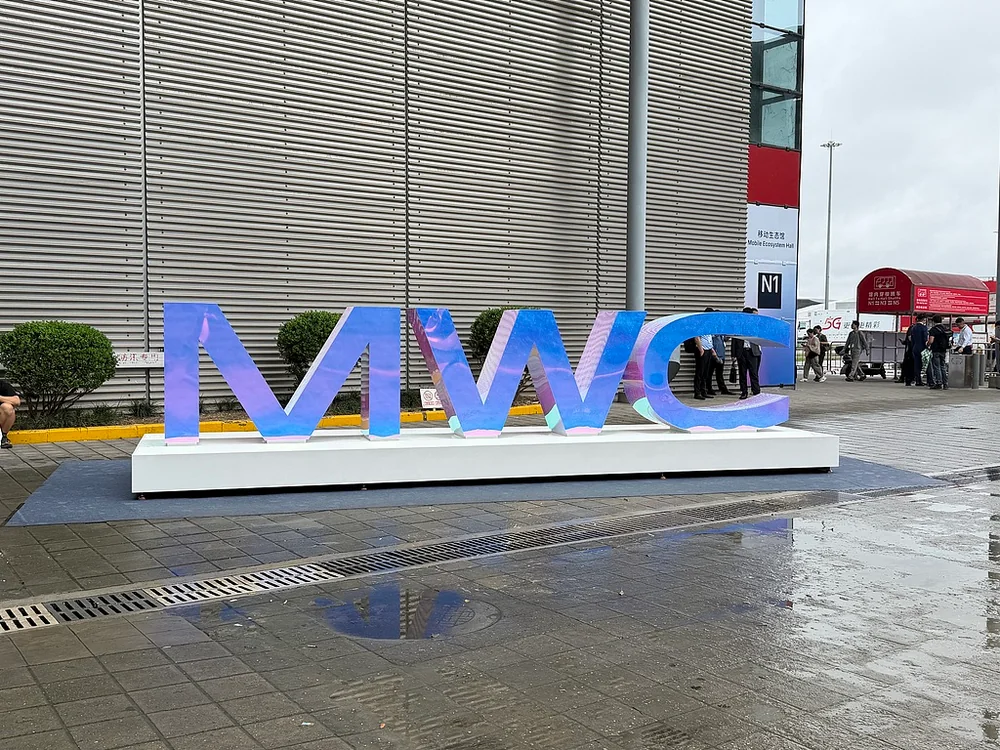
U.S. Stocks 6G and Satellite Internet Sector: Observations from MWC Shanghai and Cost Networking Analysis
Introduction
In the increasingly fierce global competition in science and technology, 6G and satellite internet, as core directions for next-generation communication technology, are gradually moving from concept to reality. The latest developments at the 2026 Mobile World Congress (MWC) Shanghai have revealed substantive progress in this field to investors. The U.S. stock market, as a bellwether for global tech innovation, has shown significant investment value in related sectors driven by both technological breakthroughs and cost networking. This article starts with observations from MWC Shanghai, deeply analyzes the cost networking logic of 6G and satellite internet, and discusses potential impacts on related U.S.-listed companies.
MWC Shanghai: Synergistic Evolution of 6G Technology and Satellite Internet
At the MWC Shanghai exhibition, several international communication giants showcased phased achievements from 6G test platforms. Compared to 5G, 6G not only achieves order-of-magnitude improvements in transmission speed (peak rates may reach 1 Tbps) but also makes breakthroughs in key technologies such as space-air-ground integrated networking, terahertz communication, and reconfigurable intelligent surfaces. Notably, satellite internet, as a critical component of 6G's "ubiquitous connectivity," is accelerating integration with terrestrial 5G/6G networks. Demonstrations of coordination between low-earth orbit satellite constellations and ground base stations at the exhibition indicate that satellite internet projects like SpaceX's Starlink and Amazon's Kuiper are evolving toward 6G standards.
This trend is already reflected in the U.S. stock market. Share prices of several satellite communication operators and semiconductor design companies received a boost during the exhibition, reflecting capital market recognition of the commercial prospects of space-ground integration. However, there remains a huge gap between technical validation and large-scale commercial deployment, with cost networking efficiency becoming the core variable determining industry implementation.
! [6G and Satellite Internet Progress]( )
Cost Networking: Key Bottleneck for Satellite Internet Commercialization
The cost structure of satellite internet mainly includes four segments: satellite manufacturing, rocket launch, ground terminals, and operations & maintenance. Currently, the manufacturing cost per LEO satellite has dropped from millions of dollars in early days to about $500,000–$1 million, but a typical constellation requires hundreds to thousands of satellites, with total investment still reaching tens to hundreds of billions of dollars. SpaceX's Starlink, for example, has deployed about 6,000 satellites with cumulative launch costs exceeding $10 billion. For the Kuiper project planning 30,000 satellites, the investment pressure is even more significant.
Optimization paths for cost networking focus on three aspects: first, scaling and standardizing satellite manufacturing, using automated production lines and 3D printing; second, reuse of rockets reduces launch costs—SpaceX's Falcon 9 single launch cost has fallen to about $15 million, more than 90% less than early expendable rockets; third, ground terminal cost control—Starlink user terminals currently sell for about $600, which could drop below $200 through supply chain integration. At MWC Shanghai, several Chinese companies showcased low-cost terminals using phased array antenna technology, suggesting future terminal prices could further drop to the hundred-dollar level.
For U.S. stock investors, marginal improvements in cost networking will directly boost user growth and cash flow improvement for satellite internet operators. Once the breakeven point per user (estimated in the $500–$800 ARPU range) is broken, valuations of related companies will undergo revaluation.
Investment Logic for Related U.S. Sectors
In the U.S. stock market, the 6G and satellite internet theme mainly involves three types of companies: satellite operators (e.g., SpaceX is not publicly listed but related ETFs include shadow companies); communication equipment and chip suppliers (e.g., Qualcomm, Broadcom, Xilinx); and launch service providers (e.g., Lockheed Martin, Northrop Grumman). Additionally, some telecom operators with spectrum resources (e.g., T-Mobile, AT&T) are entering this track through partnerships with satellite companies.
From a technology iteration standpoint, 6G standards are expected to be finalized around 2028–2030, while the commercialization window for satellite internet has already opened earlier. Starlink now has over 4 million global users with annual revenue growth exceeding 100%, but free cash flow has not yet turned positive. Investors need to monitor the pace of user growth and unit cost reduction. On the other hand, 6G frontier technologies like terahertz communication and dynamic spectrum sharing may bring incremental orders to related semiconductor companies in the next 3–5 years.
Conclusion
Technical demonstrations at MWC Shanghai prove that the convergence of 6G and satellite internet is no longer a distant vision but an industry transformation underway. However, cost networking remains the core determinant of whether the industry can achieve large-scale commercialization. Pricing of related U.S. stock sectors must consider both valuation sentiment from technological breakthroughs and actual realization of cost reduction curves and user growth data. For professional investors, before the tipping point of satellite internet cost networking, early positioning in leading companies with technological barriers and scale capabilities may yield long-term excess returns. In the future, as the cost of space-air-ground integrated networking continues to decline, the "connectivity dividend" of the 6G era will truly benefit the world, and the U.S. stock market will be an important carrier of this narrative.