


Here is a professional article created based on your reference content and requirements.
Tech Stock Valuation Logic Shifts: US Three Major Indices Plunge, Lessons from Tesla's Rout
On Thursday, July 23 (Eastern Time), all three major US stock indices closed lower, with the tech sector leading the decline. The Dow Jones Industrial Average fell 0.97%, the S&P 500 dropped 1.21%, and the tech-heavy Nasdaq Composite plunged 2.15% to close at 25,137.69 points. This selloff, triggered by tech giant earnings, marks a profound shift in the valuation pricing logic for high-growth tech stocks.
1. Tech Giants Under Pressure, Tesla Leads Losses
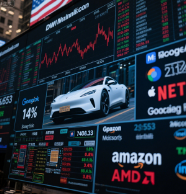
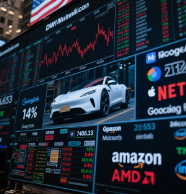
In trading, large-cap tech stocks broadly sold off. Tesla was the biggest "bear" of the day, with its stock price plummeting over 14%, its largest single-day drop since June 2025, nearing a one-year low. Its year-to-date losses have widened to 28%, making it the worst performer among the "Magnificent Seven" US tech stocks, with a 34% decline from its peak. Additionally, Alphabet A fell over 7%, pushing its market cap below $4 trillion; Amazon, Meta, Microsoft, and others also dropped. The chip sector showed divergence, with memory concept stocks strengthening against the trend while most logic chip and equipment stocks faced pressure.
2. Deep Signals in Earnings Divergence: From AI Narrative to Profit Reality
The immediate trigger for Tesla's plunge was a Q2 earnings report showing "record revenue but sharply lower profits." Although revenue grew 26% year-over-year to $28.24 billion, beating expectations, adjusted EPS was only $0.33, far below the expected $0.50. GAAP operating profit plunged 57% year-over-year, with operating margins falling to 1.4%, and automotive gross margins also declined. Sales growth failed to convert into profitability, instead accompanied by a surge in capital expenditures.
The company's Q2 capital expenditures soared 142% year-over-year to $5.79 billion, with full-year spending expected to exceed $25 billion, and it stated that high-intensity investment will continue for 2 to 3 years. This directly pushed quarterly free cash flow negative to -$1.09 billion. Although AI businesses like FSD subscriptions, Robotaxi, and Optimus humanoid robots are progressing, they remain in a large-scale "cash-burning" investment phase, unable to contribute meaningful profits in the short term.
After the earnings release, multiple Wall Street firms cut Tesla's price target, with a wide divergence from the most optimistic Cantor Fitzgerald (maintaining $485) to the most pessimistic Wells Fargo ($130). Market consensus has fundamentally shifted: capital no longer pays a premium for distant AI narratives alone but demands clear and verifiable timetables for profit delivery. This marks a formal shift in the valuation pricing logic for this tech earnings season. As Musk admitted on the earnings call, the Optimus humanoid robot will be Tesla's hardest business to scale for mass production, further fueling market concerns.
3. Global Risk Transmission: Three Pathways Reflecting on A-Shares
The sharp volatility in overseas markets is transmitting risk sentiment to A-shares via cross-border channels. Analysts point out that this round of risk is primarily transmitted through three pathways: adjustments in industry chain fundamental expectations, cross-border northbound capital flows, and global market sentiment resonance. Previously, A-share computing power and intelligentization tracks were crowded with trades and high profits, making external shocks likely to amplify short-term fluctuations.
From a sector mapping perspective, Tesla's rout first impacts A-shares in automotive intelligentization and robotics sectors with close linkages. The deeper signal lies in the change of valuation paradigm: the market is reexamining targets with high capital expenditures and valuations relying on long-term stories. The A-share market may undergo a structural rebalancing, with high-valuation AI hardware companies lacking interim earnings delivery and relying purely on concept narratives facing sustained pressure in the short term, while capital is expected to gradually shift to targets with real orders and consistent profit delivery.
Conclusion
Tesla's current predicament is essentially a microcosm of the intense conflict between long-term vision and short-term profitability. Going forward, whether Q3 automotive gross margins stabilize, when massive capital expenditures generate returns, and the commercialization progress of Robotaxi and humanoid robots will be key observation indicators determining its stock price direction. For the broader tech sector, the pain of this earnings season may be a healthy valuation correction, urging the market to refocus on corporate profitability and cash flow generation capabilities. In the A-share market, the transmission of external risks will also accelerate internal structural reshuffling, driving capital from "stories" to "reality."